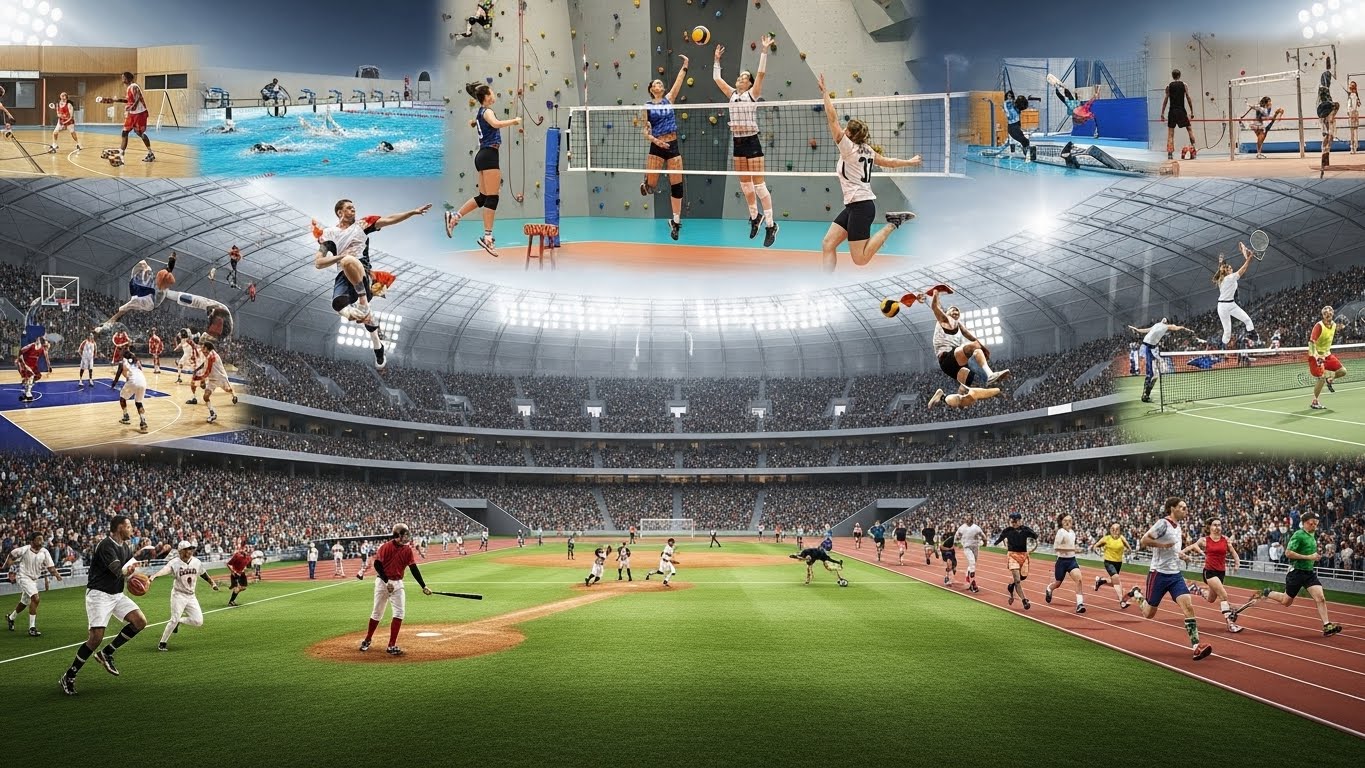
Sports have always been more than just games; they are a reflection of human spirit, determination, teamwork, and passion. Across continents, cultures, and centuries, sports have united people, inspired generations, and shaped identities. Whether it is football fields buzzing with energy, basketball courts echoing with cheers, or the silent tension of a tennis match, sports embody both the struggle and the triumph of humanity. In this blog, we will explore the multifaceted world of sports — from their origins and importance to their role in shaping societies, developing individuals, and connecting the world.
The Ancient Roots of Sports
The history of sports dates back thousands of years. In ancient civilizations such as Greece, Egypt, and China, sports were not only a form of entertainment but also a means of spiritual and physical development. The Greeks, for example, introduced the Olympic Games in 776 BC, where athletes competed to honor their gods and display their strength, agility, and courage. These early games laid the foundation for modern sporting competitions.
Similarly, in ancient Egypt, wrestling, swimming, and archery were popular among warriors and nobles. The Chinese had their own forms of martial arts and ball games, while the Mayans and Aztecs in Central America played ritualistic ball games that were deeply connected to their culture and religion. These ancient sporting traditions reveal that physical competition has always been a vital part of human life, symbolizing power, discipline, and unity.
The Evolution of Modern Sports
Modern sports began to take shape in the 19th century, particularly in Europe. The industrial revolution brought about significant social changes — people had more leisure time, better transportation, and improved communication systems. This allowed for the formal organization of sports, standardization of rules, and creation of professional leagues.
Football (soccer) emerged as a global phenomenon during this period. Originating in England, it quickly spread across Europe, South America, and eventually the entire world. Similarly, sports like cricket, rugby, tennis, and athletics became popularized through colonial influence and international competition. The revival of the Olympic Games in 1896 in Athens marked a new era of sports — one that celebrated international friendship, fair play, and human excellence.
By the 20th century, sports had evolved into a major part of global culture, with new disciplines like basketball, baseball, volleyball, and motorsport capturing millions of fans. Television and radio further expanded their reach, turning athletes into global icons and transforming sports into a multi-billion-dollar industry.
The Cultural Significance of Sports
Sports have always served as a mirror to society. They reflect the values, struggles, and dreams of people. In many ways, they act as a common language that transcends borders, politics, and religion. The spirit of competition, teamwork, and respect is universal, making sports one of the most powerful tools for cultural exchange.
In countries like Brazil, football is not just a game — it is a national identity, a source of pride, and a way of life. In India, cricket has achieved an almost divine status, bringing together millions of people regardless of their background. In the United States, sports like basketball and American football symbolize community spirit and resilience.
Beyond entertainment, sports have often played a key role in social and political movements. The 1968 Olympics saw athletes raise their fists in the Black Power salute, symbolizing resistance against racial inequality. Similarly, the participation of women in competitive sports has challenged traditional gender roles and inspired social change across the globe.
The Role of Sports in Education and Character Building
Sports are a powerful teacher. They instill discipline, perseverance, teamwork, and leadership — qualities essential for success in all aspects of life. From school-level competitions to professional leagues, sports teach individuals how to handle victory with humility and defeat with grace.
Participation in sports from an early age helps children develop both physically and mentally. Physical activities improve coordination, strength, and endurance, while also reducing stress and anxiety. On the emotional side, sports promote confidence, social skills, and problem-solving abilities.
Educational institutions that emphasize sports often produce well-rounded individuals who excel not only academically but also socially. The teamwork learned on the field translates to collaboration in classrooms and workplaces. Coaches and mentors play a vital role in shaping young minds, teaching them lessons about hard work, dedication, and resilience that go far beyond the game itself.
The Globalization of Sports
In the 21st century, sports have truly become global. International tournaments like the FIFA World Cup, the Olympic Games, and the Cricket World Cup bring together nations from all over the world, fostering unity and peace. These events are not only competitions but celebrations of cultural diversity and human achievement.
The rise of digital media has transformed how fans engage with sports. Today, people can watch live matches, follow their favorite athletes on social media, and even participate in virtual sporting communities. This interconnectedness has made sports more inclusive and accessible, allowing fans from every corner of the globe to share their passion.
Sports leagues have also gone international. European football clubs tour Asia and America; American basketball players join overseas leagues; and athletes from small nations compete on the biggest stages. This exchange of talent and culture enriches the sporting world and enhances global unity.
The Business and Economics of Sports
Sports are not just about competition; they are a major global industry. From ticket sales and broadcasting rights to sponsorships and merchandise, sports generate billions of dollars each year. Major sporting events can boost tourism, create jobs, and stimulate local economies.
Athletes themselves have become brands, endorsing products and representing companies. Sports apparel giants and media networks invest heavily in athletes and leagues, further driving economic growth. However, this commercialization has also raised questions about fairness, ethics, and the balance between profit and passion.
Despite these concerns, sports remain one of the most sustainable entertainment industries in the world. The business side of sports ensures that athletes are rewarded for their efforts and that fans continue to enjoy world-class competitions. It also supports the development of infrastructure, such as stadiums, training facilities, and youth academies, ensuring the growth of sports for future generations.
The Science and Technology Behind Sports
Modern sports rely heavily on science and technology. From equipment design to performance analysis, technological innovation has revolutionized how athletes train and compete. Advanced biomechanics, nutrition science, and data analytics allow athletes to push the limits of human capability.
In recent years, wearable technology has become a vital part of training. Smartwatches, fitness trackers, and motion sensors collect data on heart rate, speed, and fatigue, helping coaches optimize performance and prevent injuries. Video replay systems ensure fair judgment, while virtual simulations are used to prepare athletes for competition.
Technology has also transformed fan experience. High-definition broadcasts, virtual reality, and interactive apps bring fans closer to the action than ever before. Sports have entered a digital age where entertainment, analysis, and engagement blend seamlessly.
The Psychological Side of Sports
While physical strength and skill are crucial, mental toughness often determines success in sports. Athletes face immense pressure, both from competition and public expectations. Managing stress, staying focused, and maintaining motivation are essential components of high-level performance.
Sports psychologists play an increasingly important role in helping athletes handle challenges such as performance anxiety, confidence issues, and burnout. Visualization techniques, meditation, and goal-setting are commonly used strategies to enhance mental performance.
The mental lessons learned from sports — such as perseverance under pressure, emotional control, and focus — are valuable in everyday life. Sports teach individuals to stay determined despite obstacles and to maintain balance between ambition and well-being.
Women in Sports: Breaking Barriers
The journey of women in sports has been one of courage and transformation. For centuries, women faced exclusion and discrimination in competitive sports. However, the rise of female athletes over the last century has changed the landscape entirely.
Trailblazers like Serena Williams, Simone Biles, and Megan Rapinoe have proven that women can dominate in arenas once reserved for men. Their success has inspired millions of young girls to pursue athletic dreams and has advanced conversations about gender equality in sports.
Today, women’s sports are gaining recognition, with increasing media coverage, sponsorship, and fan engagement. Events such as the Women’s World Cup and the WNBA have shown that the world is ready to embrace female athletes with the same passion and respect as their male counterparts.
Sports and Health: A Lifelong Connection
Beyond competition, sports play a vital role in maintaining health and wellness. Regular physical activity reduces the risk of chronic diseases, improves cardiovascular health, and boosts mental well-being. Sports encourage active lifestyles and help combat issues like obesity, depression, and stress.
Even for non-professional athletes, engaging in sports provides a sense of community and motivation. Group sports foster social connections, while individual activities like running, swimming, or cycling promote self-discipline and mindfulness.
In today’s digital age, where sedentary lifestyles are common, sports remind us of the importance of movement, nature, and human connection.
Challenges Facing the World of Sports
Despite its many benefits, sports are not without challenges. Issues such as doping, corruption, and commercialization have at times tarnished the image of athletics. The pressure to win at any cost can lead to unethical practices and exploitation.
Moreover, the mental and physical toll on athletes can be immense. The pursuit of perfection often comes with injuries, stress, and burnout. Addressing these challenges requires a balance between competitiveness and compassion. Sports organizations are increasingly focusing on athlete welfare, transparency, and sustainability to ensure that sports remain a force for good.
Environmental concerns also play a role. Large-scale sporting events often have a significant ecological impact. However, the industry is moving towards greener practices, such as sustainable stadiums, eco-friendly materials, and carbon-neutral events.
The Future of Sports
The future of sports is filled with exciting possibilities. Emerging technologies like artificial intelligence, augmented reality, and genetic research could redefine training, performance, and even fan interaction. Esports — competitive video gaming — has already become a global phenomenon, attracting millions of viewers and challenging traditional notions of athleticism.
At the same time, the growing emphasis on inclusivity and equality will continue to shape sports. Adaptive sports for people with disabilities, for instance, have gained widespread recognition through the Paralympic Games, demonstrating that the human spirit knows no limits.
As society evolves, so will sports. The essence of competition, fair play, and unity will remain, but the way we experience and engage with sports will continue to transform.
Conclusion: The Timeless Power of Sports
Sports are far more than games; they are stories of courage, unity, and passion. They teach us about discipline, resilience, and the power of teamwork. They break down barriers, celebrate diversity, and inspire hope. From the earliest Olympic Games to the modern global stage, sports have been a constant reminder of what humanity can achieve when driven by purpose and spirit.
Whether one is an athlete, a fan, or a casual participant, sports have the power to uplift and connect us all. They are the universal language of determination, joy, and respect — a timeless reflection of the human journey itself.