
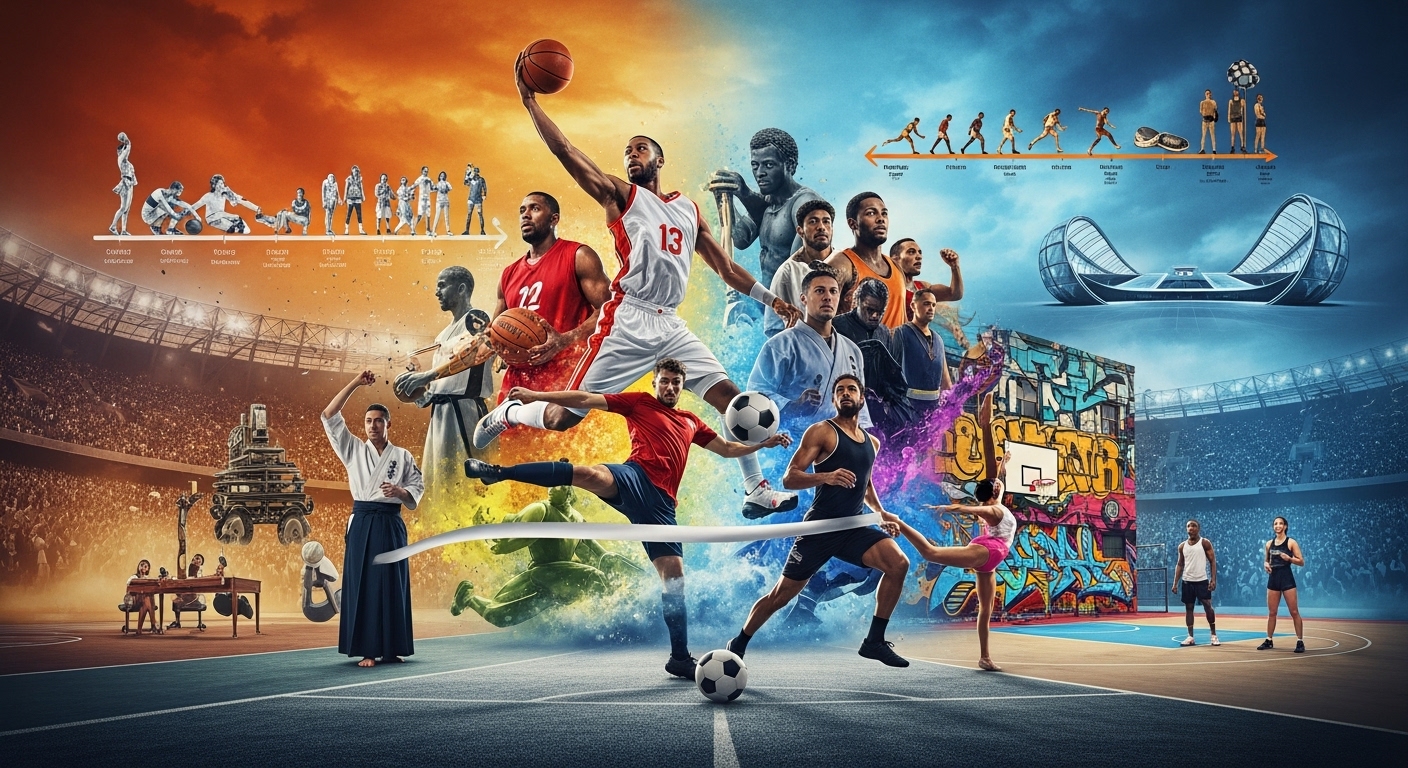
Sports have been an integral part of human civilization for centuries, shaping cultures, societies, and individuals alike. From the earliest hunting competitions to the modern Olympic Games, sports represent much more than just physical activity; they embody discipline, teamwork, resilience, and the unending quest for excellence. The beauty of sports lies in their universality—no matter the language, region, or culture, the thrill of victory and the pain of defeat are emotions that every athlete and fan understands.
In today’s fast-paced, interconnected world, sports have evolved beyond mere competition; they have become a global industry, a source of entertainment, and a platform for social change. This blog delves deep into the fascinating world of sports—exploring their history, impact, diversity, challenges, and the values that make them a timeless human pursuit.
The Origins of Sports and Human Competition
The roots of sports can be traced back to prehistoric times when early humans engaged in physical activities as part of survival. Hunting, running, and throwing were essential for daily life, but over time, these skills began to take on a competitive and ritualistic aspect. Ancient civilizations like Egypt, Greece, China, and Rome developed organized sporting events that celebrated strength, agility, and strategy.
In ancient Greece, the Olympic Games were born in 776 BCE, becoming a symbol of unity and pride. Athletes from various city-states gathered to compete in running, wrestling, boxing, and chariot racing. Similarly, in ancient China, martial arts evolved as both a method of self-defense and a spiritual practice, reflecting the balance between body and mind.
Throughout history, sports have mirrored societal values. In medieval Europe, jousting and archery showcased the skills of knights, while in Africa, traditional wrestling and stick fighting reflected cultural identity and heritage. The unifying thread across all eras is the spirit of competition and the desire for mastery.
The Modern Evolution of Sports
The modern era of sports began in the 19th century, coinciding with industrialization and globalization. As societies became more organized, so did sports. Rules were standardized, governing bodies were formed, and international competitions began to flourish. The revival of the Olympic Games in 1896 by Pierre de Coubertin marked a turning point in sports history, promoting values of peace, fair play, and friendship among nations.
With the rise of technology and media, sports entered a new dimension. The invention of radio and television allowed millions to experience live action from across the globe. Iconic moments—like Jesse Owens winning gold in Berlin in 1936 or Muhammad Ali’s triumphs in the boxing ring—transcended the boundaries of sport and became symbols of hope and equality.
The 20th and 21st centuries have seen an explosion of sporting events and leagues, from football’s FIFA World Cup to basketball’s NBA, tennis grand slams, and cricket tournaments that unite billions of fans. Sports are now not just a pastime but a profession, a business, and a cultural phenomenon.
The Emotional Power of Sports
Sports are more than physical contests—they are emotional rollercoasters that unite people in joy, sorrow, and pride. The sight of an underdog team defeating a champion, the roar of the crowd as a last-minute goal is scored, or the tears of an athlete who has achieved a lifelong dream—these moments capture the essence of humanity.
Fans find identity and belonging through sports. Entire nations pause to watch their heroes compete, waving flags and chanting anthems. Sports can heal wounds after tragedy, bring communities together, and provide hope during dark times. When athletes dedicate their victories to their countries or loved ones, they remind us that sports are about heart as much as they are about skill.
Athletes themselves experience a range of emotions—nervousness before a match, the thrill of competition, and the agony of defeat. But it is these emotional highs and lows that shape their character and inspire millions watching from afar.
The Role of Teamwork and Leadership
One of the greatest lessons sports teach is the value of teamwork. Whether it’s football, basketball, cricket, or hockey, success depends not on one player but on collective effort. Each team member has a role to play, and understanding that unity often outweighs individual talent is what makes champions.
Team captains and coaches play pivotal roles in shaping this dynamic. Leadership in sports isn’t about giving orders; it’s about inspiring confidence, maintaining harmony, and making strategic decisions under pressure. Great leaders—like Lionel Messi, Michael Jordan, or Serena Williams—demonstrate that leadership comes from passion, humility, and example, not just authority.
The concept of teamwork extends beyond the field. It teaches players to communicate, trust, and respect one another—skills that are equally vital in everyday life and professional careers. Sports thus serve as a microcosm of society, reflecting how cooperation can achieve greatness.
The Importance of Discipline and Training
Behind every victory is countless hours of hard work. Sports demand immense discipline, both physical and mental. Athletes dedicate years to training, perfecting technique, and building endurance. This discipline extends to diet, sleep, and mindset, as even a small lapse can make the difference between winning and losing.
Training isn’t only about physical strength—it’s also about mental toughness. Athletes must learn to stay focused, handle criticism, and recover from setbacks. The journey to success is rarely smooth, but those who persevere often emerge stronger. This relentless commitment inspires millions who see athletes as symbols of human potential.
From early morning runs to late-night drills, every moment counts. The stories of great athletes remind us that talent may open doors, but hard work and discipline are what keep them open.
Sports as a Global Language
Sports have a unique power to connect people across cultures and borders. A football match in Brazil, a cricket game in India, or a basketball showdown in the United States—all share the same spirit of excitement and competition. Even when fans speak different languages, they understand the meaning of a goal, a six, or a slam dunk.
The global nature of sports has made them a bridge for diplomacy and peace. Historical examples, such as “ping-pong diplomacy” between the United States and China, demonstrate how sports can soften political tensions. The Olympic Games themselves are often seen as a symbol of unity, bringing together nations regardless of conflict or ideology.
In today’s digital age, sports have become more interconnected than ever. Social media allows athletes to share their journeys with fans worldwide, making them accessible and relatable. This global connectivity ensures that the love for sports continues to grow across generations.
The Rise of Women in Sports
For decades, women fought for recognition in the sporting world. Today, female athletes stand as equals, breaking barriers and setting records once thought impossible. From Serena Williams in tennis to Megan Rapinoe in football, from Simone Biles in gymnastics to Sania Mirza in tennis, women have proven that determination knows no gender.
The rise of women’s sports has been one of the most significant social movements of recent times. Increased representation, equal pay debates, and global viewership have all helped elevate women’s competitions. More young girls are now encouraged to pursue sports, inspired by their heroes who’ve shown that passion and talent can rewrite history.
This transformation not only benefits women’s sports but also society as a whole. It promotes equality, diversity, and empowerment, ensuring that future generations grow up with the belief that greatness is possible for everyone.
The Business and Economics of Sports
Modern sports are not just about competition—they’re also a multi-billion-dollar industry. Sponsorships, broadcasting rights, merchandise, and ticket sales drive the global sports economy. Major events like the Olympics or the FIFA World Cup can boost national economies, attract tourism, and create thousands of jobs.
Athletes, too, have become global brands. Endorsement deals with companies turn sports stars into icons, influencing fashion, lifestyle, and social causes. The connection between sports and business also funds grassroots programs, allowing more youth to access training and facilities.
However, the commercial side of sports brings challenges as well. Excessive commercialization can shift focus from fair play to profit. Maintaining balance between entertainment and integrity remains crucial for the long-term sustainability of sports.
The Role of Technology in Modern Sports
Technology has revolutionized the world of sports. From advanced training equipment to data analytics and instant replay systems, innovation has enhanced both performance and fairness. Athletes now use wearable devices to monitor heart rate, sleep, and muscle recovery, while coaches analyze digital data to refine strategies.
VAR (Video Assistant Referee) in football, Hawk-Eye in tennis, and goal-line technology in hockey are examples of how technology ensures accuracy in crucial decisions. Similarly, fans enjoy immersive experiences through virtual reality and live streaming, bringing them closer to the action.
Technology has also made sports safer, with improved protective gear and injury prevention methods. The fusion of science and sports continues to push the boundaries of what the human body can achieve.
The Dark Side of Sports
Despite the beauty of competition, sports also have a darker side. Issues like doping, corruption, match-fixing, and unethical behavior tarnish the integrity of games. The pressure to win at all costs has sometimes led athletes to make poor choices, compromising their health and reputation.
Additionally, the commercialization of sports has occasionally overshadowed its true spirit. Financial inequality between leagues, clubs, and countries can limit opportunities for talented but underprivileged athletes.
Addressing these problems requires strict regulation, transparency, and education. True sportsmanship lies not in victory at any price but in competing with honesty and respect.
The Future of Sports
The future of sports looks promising yet challenging. As technology, media, and globalization continue to evolve, sports will reach new audiences and inspire new generations. Esports, or competitive gaming, has already emerged as a major player, attracting millions of viewers and creating a new kind of athlete.
Sustainability will also play a key role. Eco-friendly stadiums, ethical sponsorships, and community-driven events are shaping a new era of responsible sports management. Mental health awareness among athletes is gaining attention too, ensuring that well-being is prioritized alongside performance.
In the coming decades, sports will likely continue to be a driving force for unity, innovation, and inspiration. The values they represent—discipline, courage, and perseverance—will remain timeless.
Conclusion: The Timeless Spirit of Sports
Sports are not merely games; they are reflections of life itself. They teach us how to win with grace, lose with dignity, and never stop striving for excellence. They build bridges between nations, instill values in youth, and remind us that greatness is born from dedication.
From the dusty playgrounds of small towns to the glittering arenas of international fame, the spirit of sports continues to inspire billions. Every athlete, whether amateur or professional, carries within them the same dream—to push boundaries, to overcome limits, and to leave a mark that endures beyond the field.
In a world often divided by differences, sports stand as a beacon of unity. They remind us that despite our diverse backgrounds, we all share one thing in common—the love for the game and the belief that with hard work and heart, anything is possible.